What Is a Prototype? Definition, Types, and Key Benefits

What Is a Prototype? Definition, Types, and Key Benefits
A prototype is an early sample, model, or release of a product built to test a concept, validate assumptions, or replicate the final user experience before full-scale production. In product development, software engineering, UX design, and manufacturing, a prototype serves as a tangible representation of an idea, allowing teams to explore design alternatives, identify flaws, and gather feedback at a fraction of the cost of a finished product. The term originates from the Greek protos (first) and typos (impression), emphasizing its role as a foundational blueprint for iteration.
Prototypes exist on a spectrum from low-fidelity (simple sketches or paper models) to high-fidelity (interactive digital mockups or fully functional hardware). Their primary purpose is not perfection but discovery—uncovering what works, what fails, and what users actually need. By bridging the gap between abstract concepts and concrete reality, prototypes transform uncertainty into actionable data.
Core Definition and Purpose
At its most fundamental, a prototype is a working or non-working representation of a design idea. In software, it might be a clickable wireframe showing navigation flow. In industrial design, it could be a 3D-printed casing to test ergonomics. In architecture, it is often a scale model. The common thread across disciplines is intent: prototypes are created to answer specific questions. These questions may include: Does this button placement feel intuitive? Will this material withstand stress? Does the checkout process reduce abandonment? Without a prototype, answers rely on assumption; with one, they rely on evidence.
Prototypes also serve as a communication tool. Stakeholders, investors, and team members often struggle to visualize abstract requirements. A prototype makes functionality explicit, reducing misinterpretation and aligning expectations. This is particularly critical in cross-functional teams where engineers, designers, and marketers must agree on specifications before development begins.
Key Types of Prototypes
Prototypes are categorized by fidelity, scope, and function. Understanding these categories helps teams select the right approach for their stage of development.
Low-Fidelity Prototypes
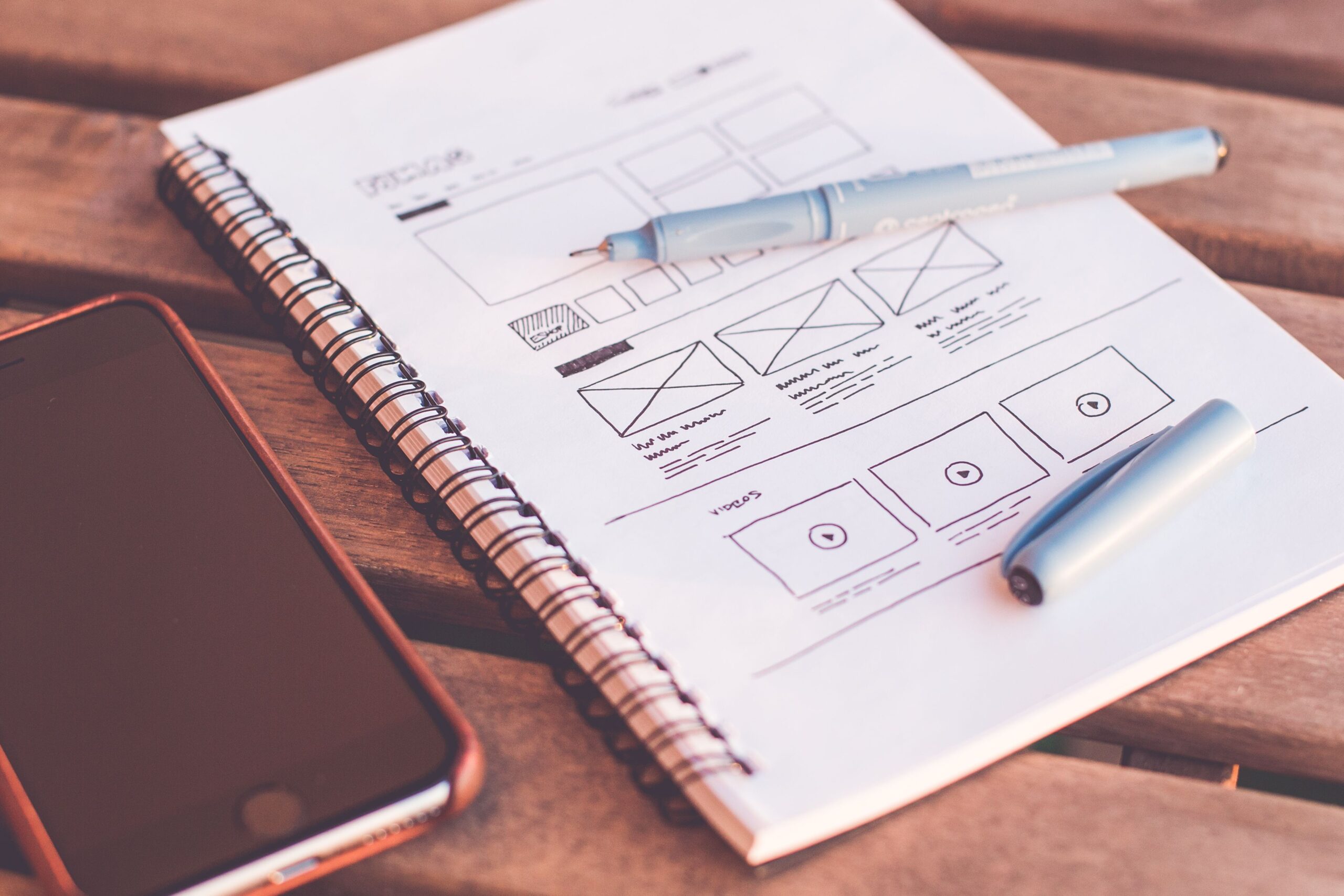
Low-fidelity (lo-fi) prototypes are quick, inexpensive, and often incomplete. Common examples include paper sketches, cardboard models, or slide-based wireframes. Their strength lies in speed and flexibility; a designer can create and modify a lo-fi prototype in minutes, enabling rapid exploration of multiple design directions. They are ideal for early-stage concept validation and usability testing where the goal is to test broad flows rather than pixel-perfect details. Lo-fi prototypes encourage critical feedback because they look unfinished—testers are more likely to suggest changes to a rough sketch than to a polished design, which may intimidate or bias them.
High-Fidelity Prototypes
High-fidelity (hi-fi) prototypes closely resemble the final product in look, feel, and function. In software, these are interactive mockups built with tools like Figma, Axure, or Framer, complete with transitions, animations, and realistic data. In hardware, hi-fi prototypes use actual materials, electronics, and production-like assembly. Hi-fi prototypes are resource-intensive but invaluable for user testing on final interactions, such as gesture controls, touch sensitivity, or load times. They are also essential for stakeholder buy-in and investor pitches, where visual polish signals professionalism and feasibility.
Horizontal Prototypes
A horizontal prototype shows a wide breadth of features but at a shallow depth. For example, a horizontal prototype of an e-commerce app might display the product list page, product detail page, checkout screen, and order confirmation—but none of the underlying logic (e.g., payment processing, inventory checks) works. The goal is to test overall navigation, screen flow, and system layout. Horizontal prototypes are commonly used in early UX reviews to ensure the user journey makes sense before investing in backend development.
Vertical Prototypes
A vertical prototype implements a few features in full depth. For a banking app, a vertical prototype might include a fully functional login, account balance retrieval, and fund transfer—but only for one account type. This approach tests core functionality, technical feasibility, and data integration. Vertical prototypes are common in agile development to “de-risk” critical system components early, revealing integration challenges or performance bottlenecks that horizontal views cannot detect.
Throwaway vs. Evolutionary Prototypes
This distinction relates to lifecycle management. Throwaway (or rapid) prototypes are built to answer a specific question and then discarded. They are intentionally cheap, often coded in scripting languages or constructed from foam, and are not intended to evolve into the final product. Evolutionary prototypes are refined iteratively until they become the final product. This approach is common in user-centered design where feedback loops gradually shape the prototype into production software. The choice depends on project constraints: throwaway prototypes minimize long-term debt but require rebuilding; evolutionary prototypes save time but risk technical debt if early design flaws persist into the final build.
Key Benefits of Prototyping
1. Risk Mitigation and Early Error Detection
The most quantifiable benefit of prototyping is the reduction of costly late-stage errors. A study by the Systems Sciences Institute at IBM found that fixing a bug during the design phase costs roughly $100, but the same fix during production can cost $10,000 or more. Prototypes expose usability flaws, technical limitations, and logic errors before significant resources are committed. For hardware, physical prototypes reveal issues with part fit, thermal management, or assembly sequence that cannot be seen in CAD files. For software, interactive prototypes uncover dead ends, confusing labels, or missing feedback loops that requirements documents often miss.
2. Enhanced Stakeholder and User Involvement
Stakeholders often struggle to approve designs based on written specifications. A prototype gives them something to see, touch, and interact with. This visibility accelerates decision-making and reduces rework caused by misunderstood requirements. Similarly, user testing with prototypes yields authentic behavioral data rather than hypothetical feedback. Watching a user hesitate, click incorrectly, or skip a step provides insights that surveys cannot capture. This involvement builds ownership and alignment across teams, reducing friction during production.
3. Faster Time to Market
Paradoxically, building a prototype can shorten overall development timelines. By validating core assumptions early, teams avoid building unnecessary features (scope creep) or pursuing dead-end architectures. In agile and lean methodologies, rapid prototyping cycles enable “fail fast” learning—discovering what doesn’t work quickly so the team can pivot or focus on what does. Companies like Spotify and Airbnb famously used prototypes to test market assumptions with minimal investment, allowing them to iterate and launch far ahead of competitors who attempted to build full-featured products from the start.
4. Improved Design Quality and Innovation
Prototyping fosters a culture of experimentation. When the cost of failure is low, teams are more willing to explore creative solutions. A prototype can test radical ideas—such as a new gesture control or a novel material—without committing to full production. This iterative exploration often uncovers design innovations that would never emerge from theoretical analysis alone. Furthermore, prototyping supports evidence-based design: decisions are made on data (user performance, task completion rates, error counts) rather than intuition, leading to objectively better outcomes.
5. Cost Efficiency
While prototypes require upfront investment, they reduce overall expenses by preventing expensive mistakes. A failed prototype costs pennies compared to a failed product launch. For startups operating with limited capital, prototyping allows them to secure funding or validate product-market fit without building a full solution. In regulated industries like medical devices or automotive, prototypes are essential for regulatory testing (e.g., biocompatibility, crashworthiness) before committing to tooling and mass production.
6. Clearer Documentation and Training
Interactive prototypes serve as living documentation that is far more intuitive than static diagrams. New team members can explore the prototype to understand system behavior rather than parsing lengthy requirements documents. In customer-facing contexts, prototypes are used for training, sales demos, and onboarding—showing exactly how the product will work before it exists. This clarity reduces support overhead and accelerates user adoption post-launch.